

Real-Time Search
Search requests return in about 1.9 seconds on average, with P90 under 3 seconds, so your answers can cite fresh data at top speed.
Search the live web by keyword to retrieve titles, snippets, URLs, and result positions. Optionally extract page content as Markdown or JSON.
Requesting…
Search pricing10Credits / 1K requests
Search requests return in about 1.9 seconds on average, with P90 under 3 seconds, so your answers can cite fresh data at top speed.

Retrieve organic search results with result positions, URLs, titles, and snippets. Ads and AI Overviews are excluded.

Enable extract_content to return both search results and the page content in one request, removing a second fetch and parse step.

Built-in retries and timeouts, structured error codes, workflow-friendly failure handling, and no charge for failed requests.

Outputs Markdown and JSON with navigation, ads and redundant tags removed, lowering token usage and making results model-ready.

Connect to Claude, Cursor and other platforms through Skills and MCP, with up to 100 results per request.
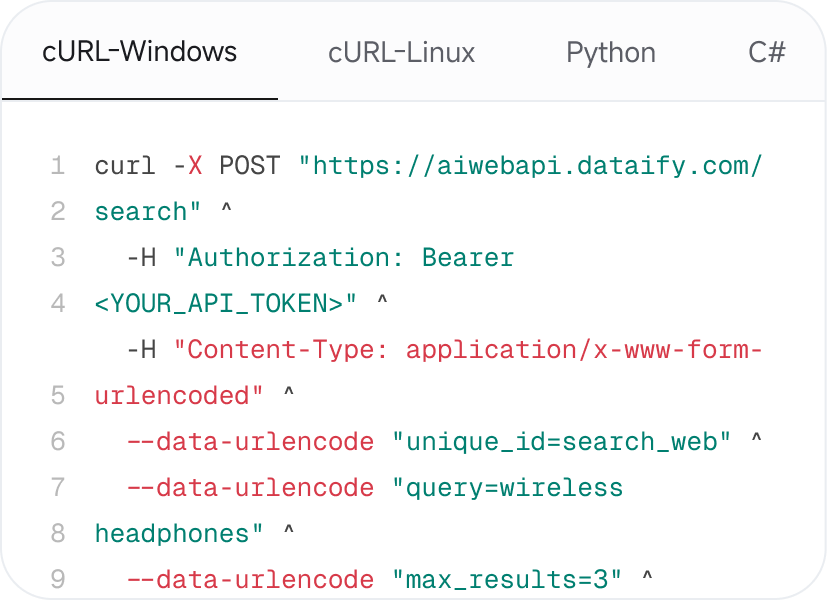
Set keywords, result count and output format.
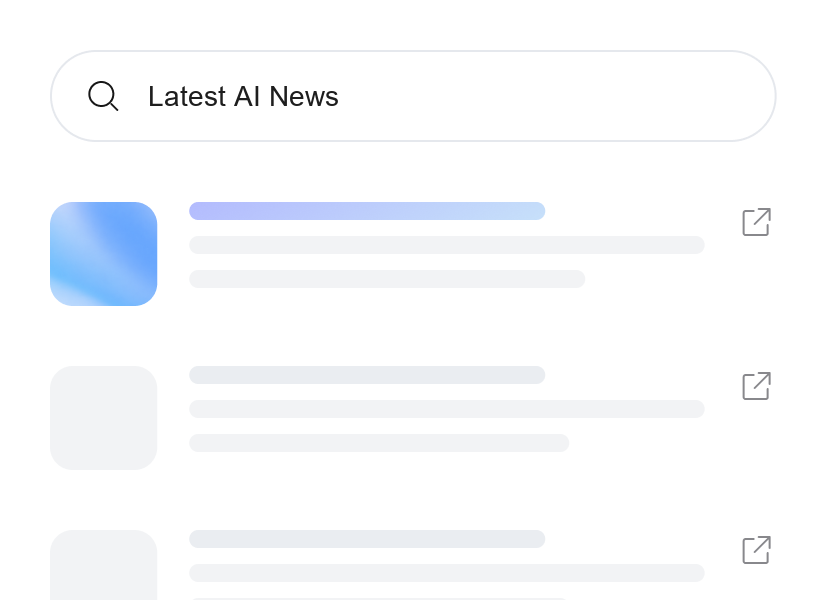
Check whether titles, snippets and rankings meet your needs.
Write results directly into agents or business processes.
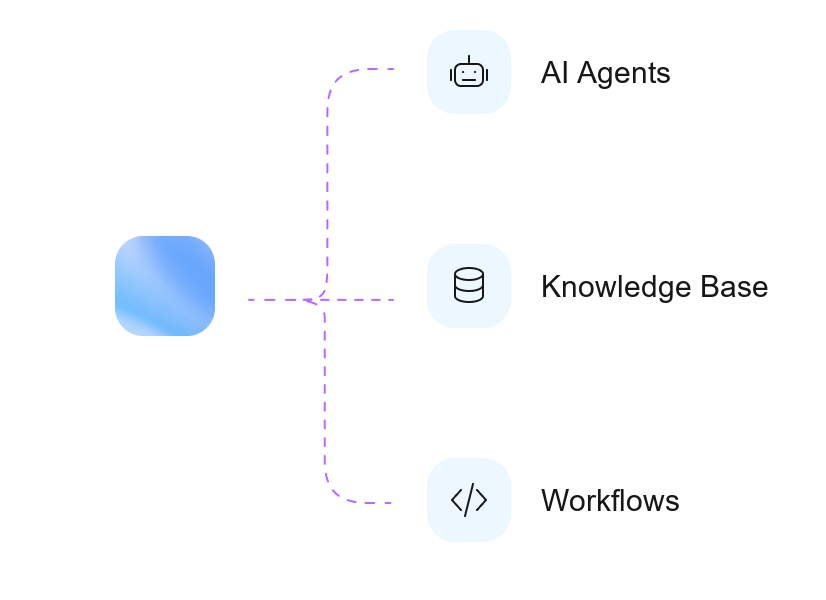


Connect Dataify data services to AI tools and.
Workflows, simplifying tool setup and data access.
Agents search the web automatically when a question arrives and ground answers with titles, snippets and source links.
Search public sources by business topic and shortlist candidate pages for knowledge bases, shortening collection cycles.
Search company websites with industry and product keywords, identify prospects from titles and snippets, and seed outreach.


Our information systems have passed the level 2 MLPS assessment, with continuous hardening of perimeter protection, access control and log auditing.

Quality management, information security and privacy protection systems are internationally certified.
Auditable standards from process design to implementation.

We apply access controls, data classification, and audit logging throughout the data lifecycle.
A complete web data workflow for AI agents
Each result returns the ranking, URL, title and snippet from Google organic search, so applications can understand pages, shortlist references and locate original sources.
Search API currently supports Google and focuses on organic results with rankings, URLs, titles and snippets, which suits agents seeking external references. SERP API supports Google, Bing, Yandex, DuckDuckGo and more, with richer result types and fields for scenarios that need full result pages.
No. Search API returns search results for your application to use. Answering, summarizing and analysis are handled by your model.
Results follow what Google returns. Page indexing and updates are controlled by the search engine. Source links in each result let users check the original page.
If results are empty, adjust keywords or request parameters and retry. For timeouts, extraction failures and other errors, failed requests are not charged; contact sales for details and solutions.
A request can return up to 100 results. Usage is billed in units of 10 results, rounded up to the next full unit. Requests that return no results or fail are not charged.
Yes. Parameters let you set the page language, source country and result time range as needed.